
Youth crime has returned to the centre of public debate, driven by repeated media coverage of car thefts, ram raids and violent incidents. Governments have responded with tougher bail laws, new offences and expanded policing powers. The underlying picture is more complex. Crime data point to concentrated offending among relatively small cohorts, alongside deeper failures in housing, education, health and youth justice systems that struggle to intervene early or consistently.
Nationally, adults remain responsible for most criminal offending. Young people are over-represented in certain categories, including vehicle theft and robbery, but researchers consistently link this to structural factors rather than individual pathology. Unstable housing, family violence, school disengagement, untreated trauma and limited access to work or structured activity are common features in areas where youth offending clusters. Where these pressures combine, police and courts cycle the same young people through the system with limited capacity to address underlying causes.
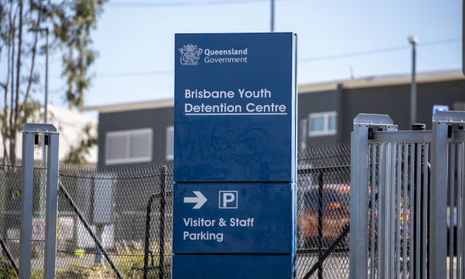
Public confidence in the justice system has weakened, particularly following high-profile cases involving bail breaches or repeat offending. Political responses have largely focused on tightening bail thresholds and expanding detention powers. Legal and youth advocates argue these tools are poorly aligned with adolescent development and risk assessment, increasing remand without clear evidence of reduced reoffending. The system oscillates between delay and escalation, often intervening late and at its most punitive point.
Community anxiety has also grown around personal safety and self-defence. Australian law provides limited scope for using force to protect property, and residents who act beyond narrow thresholds face legal risk. When visible consequences appear slow or inconsistent, this legal restraint can translate into a sense of helplessness rather than reassurance. Inquiries into policing and justice systems tend to identify issues of resourcing, coordination and leadership, rather than simple misconduct, but public perception lags behind those findings.
Immigration occasionally surfaces in these debates, often in ways that conflate background with behaviour. Research instead points to concentrated disadvantage, language barriers and service gaps as the relevant factors. Where population growth is not matched with investment in settlement support, schooling and employment pathways, pressure accumulates in predictable places.
The evidence does not support panic about an entire generation. It does support concern about systems that respond late, rely on blunt legal tools and struggle to deliver early, sustained intervention. Youth crime persists not because of a lack of punishment, but because policy settings remain poorly calibrated to prevention, rehabilitation and long-term public safety.
Sources
https://www.abc.net.au/religion/abraham-kuol-problem-african-youth-crime-in-australia/103782902
https://www.roymorgan.com/findings/9797-most-important-issues-facing-australia-january-2025