
Australian politics often centres on inner-city seats and a narrow band of national swing electorates, despite a large share of the population living in outer suburbs and growth corridors. These areas are rarely prominent in national debate unless there is a crime story, a major infrastructure announcement or a by-election. The issue is not that suburban residents lack opinions or engagement, but that their concerns are systematically filtered as decisions move through planning, media and political institutions.
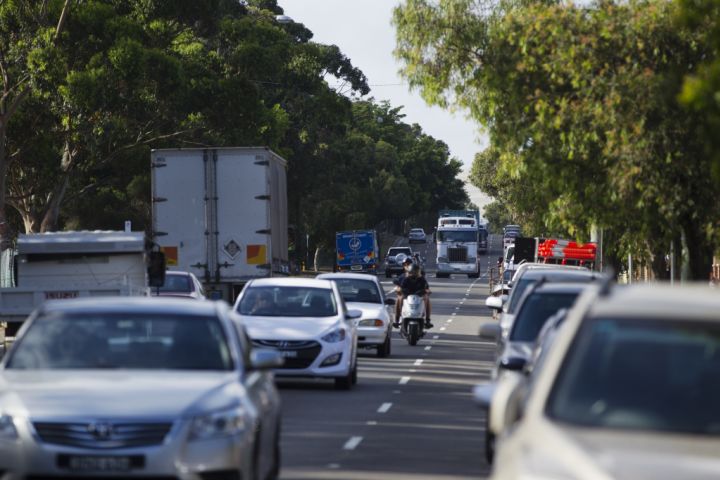
Survey data consistently show that voters rank everyday pressures—living costs, crime, access to health services and housing—above symbolic or abstract debates. In fast-growing suburbs, those pressures are amplified by weak public transport, stretched schools and clinics, and housing estates delivered faster than basic amenities. Long commutes and congestion are routine, and service gaps persist well after population thresholds are reached. These are not marginal issues, but they struggle to convert into sustained political attention.
Part of the explanation lies in how planning systems operate. Major decisions affecting suburbs are often made through rezoning processes, infrastructure pipelines and procurement frameworks that prioritise scale, speed and compliance over local context. Consultation exists, but it is typically procedural rather than deliberative, favouring organised stakeholders with time, expertise and resources. Residents’ views are captured, summarised and absorbed into formal processes, where they compete with commercial, fiscal and political constraints.
Media dynamics reinforce this filtering. The decline of local mastheads has reduced routine reporting on suburban governance, while metropolitan outlets tend to engage with outer suburbs episodically, often through crime, disaster or human-interest stories. Everyday governance issues—bus routes, school capacity, clinic closures—rarely reach broader audiences. This shapes political incentives, as attention follows visibility, and visibility follows narrative simplicity rather than cumulative impact.
Suburban voices are therefore not absent. They are present in surveys, community organisations, school councils and planning submissions. What weakens their influence is dispersion. Outer suburbs contain large populations but diffuse interests, making them electorally important yet politically inefficient. Compared with concentrated inner-city constituencies or nationally resonant causes, their concerns are easier to acknowledge than to prioritise.
The result is a persistent gap between where population growth occurs and where political focus settles. This is not a failure of participation or awareness, but a structural feature of how representation, planning and media attention intersect in Australia’s suburbs.
Sources
https://www.roymorgan.com/findings/9797-most-important-issues-facing-australia-january-2025
https://www.salvationarmy.org.au/socialjusticestocktake/act/
https://www.ruralhealth.org.au/wp-content/uploads/2025/04/NRHA_Sub-Mental_Health_and_Suicide_Prevention_Agrmnt_Rev.pdf