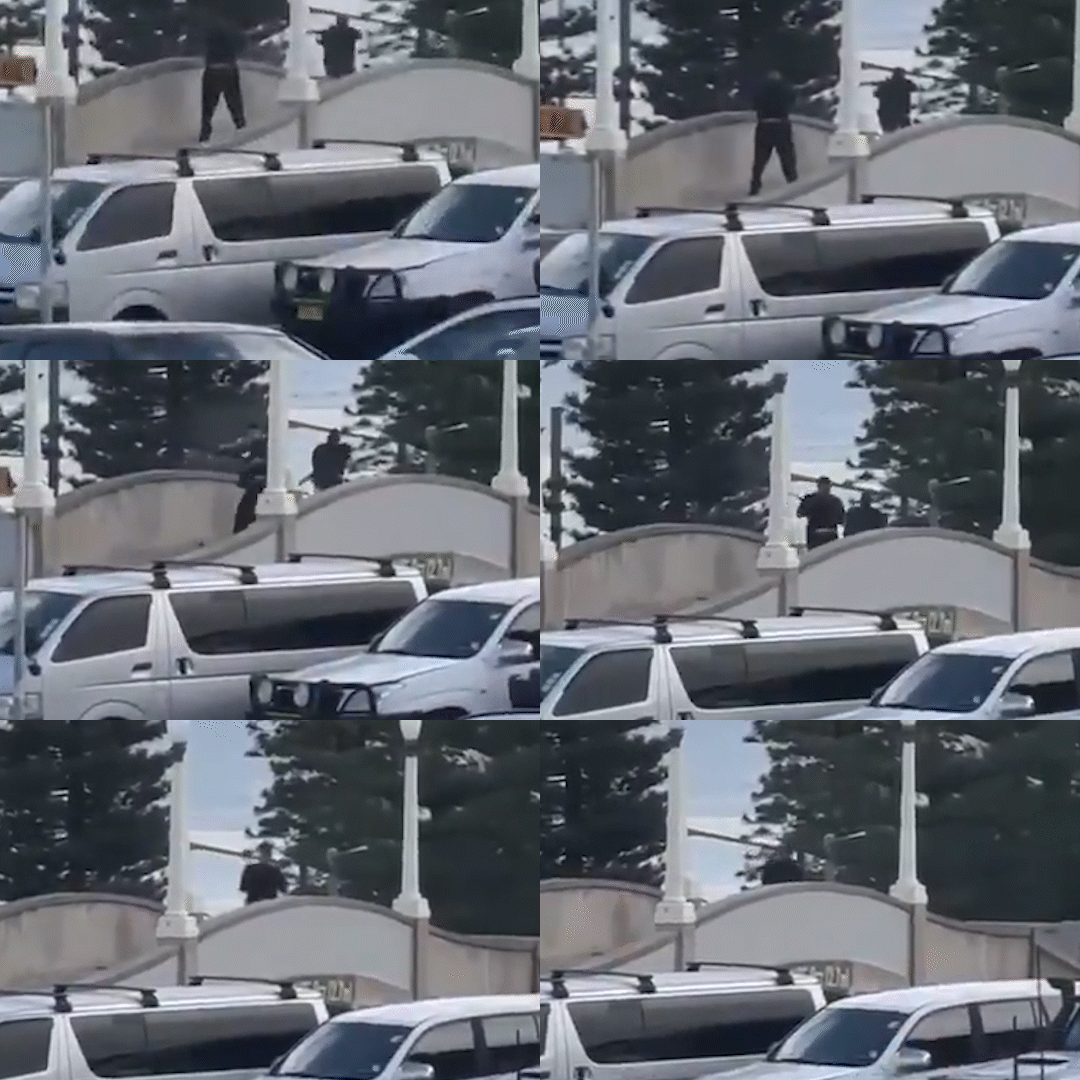
In the wake of recent terror attacks and episodes of public disorder, governments in New South Wales and Canberra have moved to back tougher controls on firearms and protests, framing the changes as necessary to protect community safety. Civil liberties groups and shooting organisations argue that the practical impact will fall mainly on licensed gun owners and ordinary Australians attending demonstrations, rather than on the small number of people planning violence.
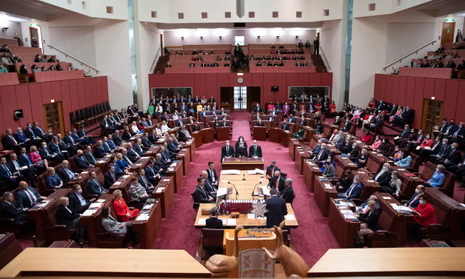
Proposed changes in NSW would cap most firearms licence holders at four guns, tighten renewal requirements and expand police powers around demonstrations. This would include broader discretion to restrict protests near sensitive sites and to intervene where religious tension is assessed as high. Similar caps have already been pursued in Western Australia. Critics note that existing licensing regimes already involve background checks, safe storage obligations and ongoing scrutiny, and that recent attackers have not typically emerged from competitive shooting communities or rural licence holders. Firearms advocates argue that long-standing, law-abiding owners are simply the easiest group to regulate, while deeper intelligence, mental-health and policing gaps are harder to address.
The proposed expansion of protest powers is similarly contested. After violent scenes outside a Sydney church in 2024, where dozens of police officers were injured during a riot following a stabbing later described as a terrorist incident, the NSW government explored broader authority to manage or shut down gatherings. Supporters argue these powers are needed to prevent further serious injuries around religious venues. Opponents warn that they risk blurring the line between proportionate security measures and a broader chilling effect on political speech and peaceful assembly.
These debates sit awkwardly alongside the Prime Minister’s own political history. Archival footage from earlier in his parliamentary career shows Anthony Albanese speaking at pro-Palestinian rallies and criticising Israeli military actions. In recent years, he has taken a firmer line on some demonstrations, condemning antisemitic chants at Sydney’s Opera House and calling for a large pro-Palestine march not to proceed in order to reduce tensions. The contrast reflects a familiar shift for politicians who move from activism into executive responsibility, where managing security and public order becomes central.
One practical point is often overlooked in these debates. In several high-profile incidents, armed offenders have been stopped quickly by individuals with extensive experience in civilian shooting disciplines, including training through local gun clubs, rather than by specialist units alone. For many licensed owners, this reinforces the view that a culture of responsible firearms training can contribute to public safety, and that blanket caps risk weakening a pool of highly regulated and skilled participants.
Taken together, the current trajectory risks sending a clear message: the easiest groups to regulate—licence holders and peaceful protesters—are likely to feel new restrictions first, while those intent on violence adapt and seek gaps elsewhere. The challenge for policymakers is to distinguish intelligence-led, proportionate responses to genuine threats from broader measures that may erode civil liberties without clearly improving security.
The views expressed in this article are the author’s own and do not necessarily reflect those of this publication.